


Mismatched Libido Therapy
When one of you wants sex more than the other
One of you reaches. The other pulls away. Maybe you've stopped initiating because you're tired of hearing no. Maybe you dread bedtime because it feels like a test you keep failing. Either way, sex has turned into something you avoid talking about, and the distance is starting to show up everywhere else.
Mismatched libido, sometimes called desire discrepancy or mismatched desire, is one of the most common reasons couples come to see me. As a Licensed Marriage and Family Therapist and AASECT Certified Sex Therapist, I help partners understand what's really driving the gap, stop the blame cycle, and build a sex life that works for both of you.


Virtual Therapy Across California

AASECT Certified Sex Therapist

Board Certified Clinical Sexologist

Trauma Informed & Afirming Care

Individuals & Couples
Signs mismatched libido is affecting your relationship
Does this sound familiar?

-
You keep a quiet tally of how long it's been.
-
One of you feels rejected. The other feels pressured.
-
Every hug or kiss feels like it might be "leading somewhere."
-
You go to bed at different times to avoid the conversation.
-
You've wondered if something is wrong with you, or with them.
-
You love each other, and you still feel more like roommates.
If you nodded along, you're not alone.

Mismatched Desire is Common
you're not broken
Most long-term couples experience a difference in sexual desire at some point. Stress, parenthood, health changes, and the everyday wear of life together all affect how often each of you wants sex. A gap in libido is not a sign that the relationship is failing or that one of you is the problem.
Here's something that surprises a lot of couples: desire doesn't always arrive out of nowhere. Some people feel spontaneous desire, the kind that shows up on its own. Many others feel responsive desire, which builds once touch, closeness, and pleasure are already happening (Basson, 2000). When partners have different desire styles, it can look like one person simply doesn't want sex. Often, they just need a different path into it.
Research suggests couples don't need to want sex equally to be satisfied. In a study of 366 couples, satisfaction was linked to how desire was nurtured and how differences were handled, not to partners matching (Kim et al., 2021).
Low desire is rarely about not loving your partner. Together, we look at what's actually in the way.
What's really driving the desire gap?
Low desire is rarely about not loving your partner. Together, we look at what's actually in the way.
Stress and mental load
Burnout, work pressure, and carrying the household to-do list can leave no room for wanting.
Parenthood and life changes
Pregnancy, postpartum, little kids, and sleepless nights change how bodies and relationships feel.
Hormones, health, and medication
Menopause, antidepressants, birth control, and chronic health conditions can all affect libido.
Pain or discomfort with sex
When sex hurts, the body learns to avoid it. That's protection, not a lack of interest.
Past trauma
Old experiences can show up in the present as shutting down, numbing, or pulling away from touch.
Resentment and disconnection
Unresolved conflict, feeling unseen, or the pursue and withdraw cycle can quietly turn desire off.
How desire discrepancy therapy can help

Understand the pattern you're both caught in and learn how to step out of it together.

Learn whether each of you leans spontaneous or responsive, and what that means for initiating.

Build language for wants, limits, and fantasies that feels safe for both of you.

Shift the focus from how often to how good, connected, and pleasurable sex feels.

Reconnect through structured, pressure-free touch that rebuilds trust in your bodies.
My Approach
Evidence-based care for mismatched desire

I don't take sides, and I don't treat the lower-desire partner as the problem to fix. Both of you have needs that matter. My style is warm, direct, and collaborative, and we'll move at a pace that feels safe for both of you.
I draw on approaches with strong research behind them. The Dual Control Model helps us map what excites and inhibits each of your desire. Emotionally Focused Therapy (EFT) builds the emotional safety desire depends on. The Gottman Method strengthens how you talk about hard things. Sensate focus, a structured touch practice you do privately at home, takes pressure off and helps rebuild pleasure step by step. When past trauma is part of the picture, EMDR can help the body feel safe with closeness again.
If something medical may be involved, such as hormonal changes, medication side effects, or pain, I'll encourage you to involve your physician or a pelvic floor physical therapist, so your care works as a team.
There's room for both of you here
If you're the higher-desire partner
You might feel lonely, rejected, or tired of being the one who always asks. Wanting sex with your partner isn't wrong. Therapy gives you space to be heard without being cast as the pushy one, and to understand what your partner is actually experiencing.
If you're the lower-desire partner
You might feel guilty, pressured, or broken. You're not. Low desire usually makes sense once we understand what's going on in your body, your life, and your relationship. Therapy helps you get curious about your desire instead of ashamed of it.
Can I come to therapy on my own?
Yes. You don't have to come as a couple. Individual therapy can be a powerful way to explore your own desire, heal past experiences, and feel more confident in your needs.
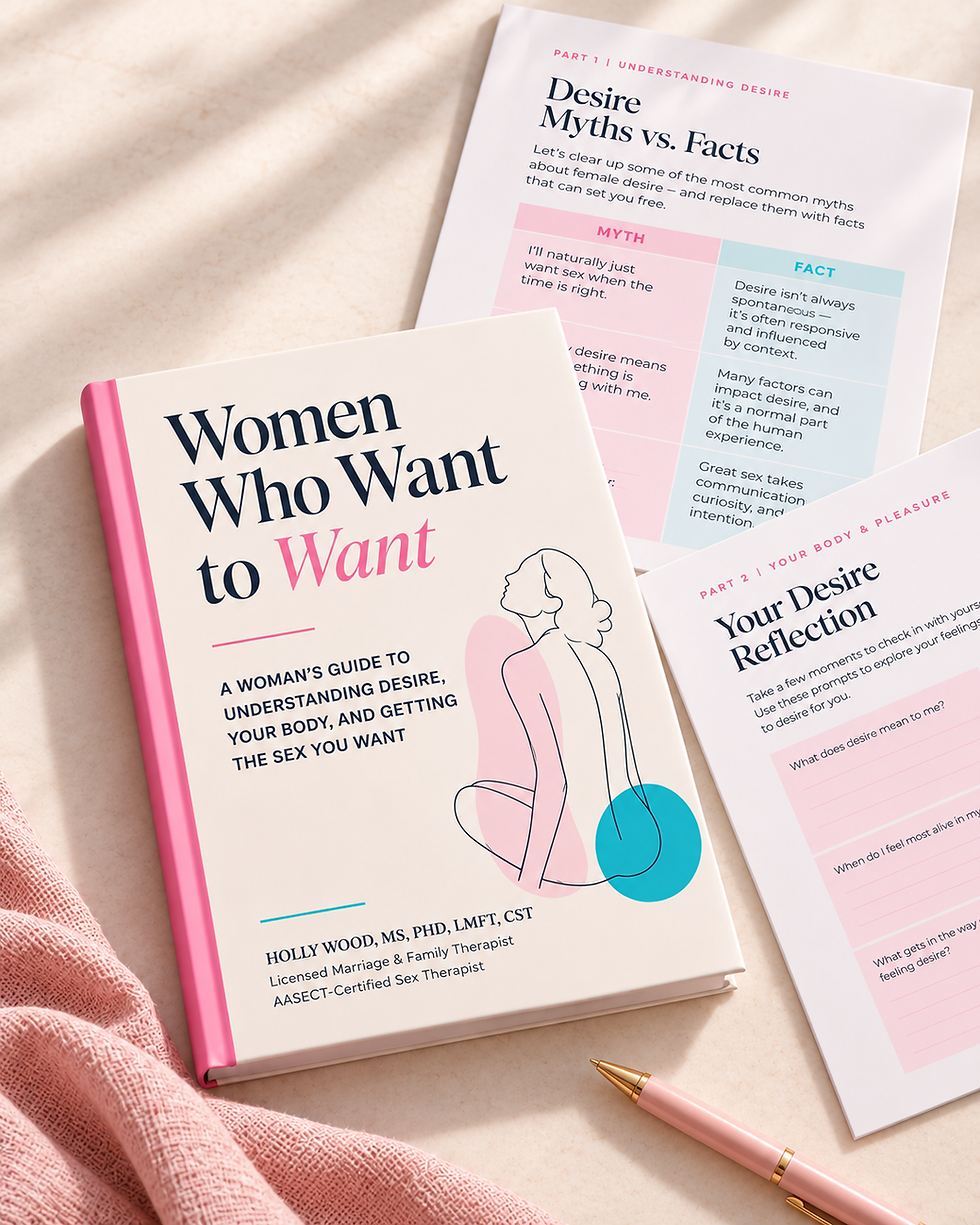
I often use my workbook Women Who Want to Want as a companion resource to help you deepen your self-understanding and make meaningful changes at your own pace.
